
Are Caffeine Pouches Safe? A Guide to Labels and Total Intake

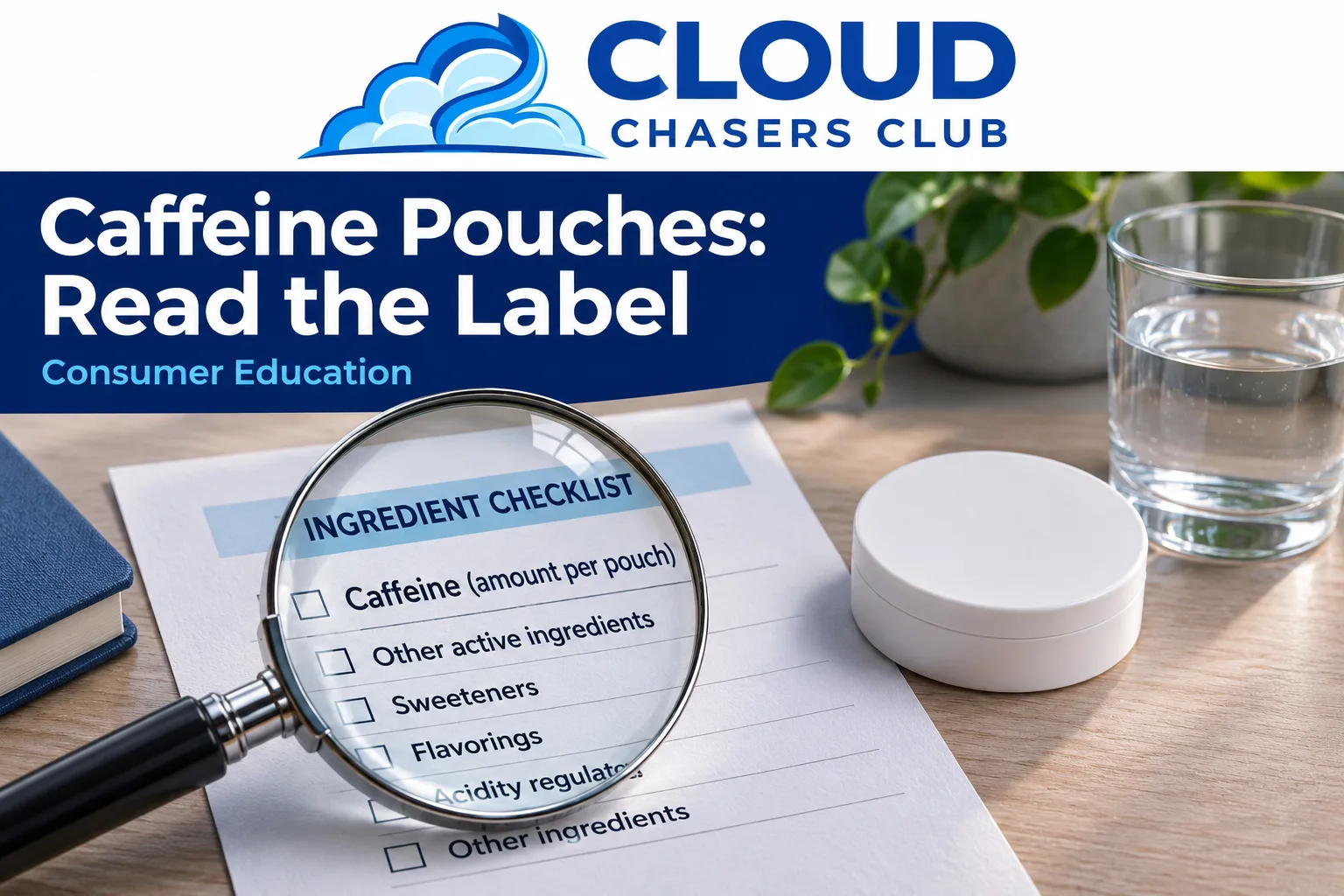
Quick answer: A caffeine pouch cannot be judged safe simply because it contains no nicotine. Its caffeine amount, other ingredients, labeling and the user’s health circumstances all matter. Read the full package and ask a healthcare professional about personal suitability; do not assume findings about coffee prove the safety of a particular oral pouch.
U.S. consumer information checked November 10, 2026. This guide explains labels, not a recommended pouch dose.
What should you check first?
- The active ingredients: nicotine-free and caffeine-free describe different things.
- The serving basis: determine whether a number refers to one pouch, several pouches or the container.
- The whole day: include caffeine from drinks, food, supplements and medicines.
What does “caffeine pouch” tell you?
It identifies a product format and a caffeine ingredient, not a standardized formula. Cloud Chasers Club’s current WIP Energy Pouches record lists caffeine, B vitamins and chromium, with 100 mg and 200 mg-labeled variants. That storefront information is not a substitute for the physical label’s serving details. The site’s Focus, Sleep and Mushroom pouch names should not be used to infer their caffeine content; request the actual ingredient panel.
For a label copy or clarification about a listed item, contact Cloud Chasers Club. A customer-service answer identifies the product; a clinician assesses health questions.
How should you interpret FDA’s 400 mg reference?
The FDA’s caffeine guidance cites 400 mg per day as an amount not generally associated with negative effects for most adults. It also describes substantial differences in sensitivity and the relevance of medications, medical conditions and pregnancy. This general reference is neither an intake target nor evidence that 400 mg from any pouch formulation is suitable.
A useful distinction is counting versus recommending. A total-intake worksheet can help you describe what you consumed to a professional. It cannot determine an individualized safe limit.
A simple way to review total intake
| Record | Why it matters |
|---|---|
| Exact product and serving size | A can and a pouch are different units. |
| Caffeine amount per serving | Unclear units make a total unreliable. |
| Number of servings already consumed | One label does not describe the whole day. |
| Other caffeinated items | Coffee, tea, energy drinks and certain medicines can add to the total. |
Do not estimate missing amounts from a flavor name or another brand. Ask the manufacturer when a label is incomplete. FDA notes that caffeine can appear in unexpected products and recommends considering all sources.
What about side effects and supplement claims?
FDA lists possible effects of too much caffeine including sleep disruption, anxiety, nausea and palpitations. Discuss symptoms with a healthcare professional rather than adding more caffeine to counter tiredness. This article cannot determine their cause.
If a pouch is sold as a dietary supplement, that designation does not establish FDA approval. FDA explains that supplements are not approved before marketing. A seller’s classification also does not settle whether a specific oral formulation meets that legal definition. Avoid treating words such as “focus” or “energy” as clinical evidence.
Frequently asked questions
Are nicotine-free pouches always stimulant-free?
No. Check the caffeine and other active-ingredient statements separately.
Does natural caffeine have a separate safety allowance?
No. FDA advises considering caffeine from all sources, including naturally occurring and added caffeine.
Can a front-of-can number be used without reading the serving size?
No. Confirm the unit and serving basis first.
Is 400 mg a recommended pouch dose?
No. It is a general adult dietary reference, not a dose recommendation for this format.
Does this guide establish that WIP or another pouch is safe?
No. This review verified listing information, not product-specific clinical safety.
Where should someone ask about medication interactions?
Ask a pharmacist or another qualified healthcare professional with the full ingredient label available.